PMost traders begin with a market they already understand, often the one closest to home. The harder question comes later: what happens when curiosity moves to an index, a metal or a currency pair in another region? AFG-Management builds its public site around that move, with one account and separate market pages for currencies, crypto, indices and commodities.
This AFG-Management review follows an imagined trader who knows one home market through the site in the order a newcomer would meet it, and notes at each step what the public pages say and what they leave out.
Step One: Find the Market Abroad
The indices page runs from the S&P 500 and NASDAQ to the DAX, the Nikkei and the TA 35, and describes access to “the American, European, and Asian economies”. A trader who follows the DAX can look at the Nikkei in the same account, with no second sign-up.
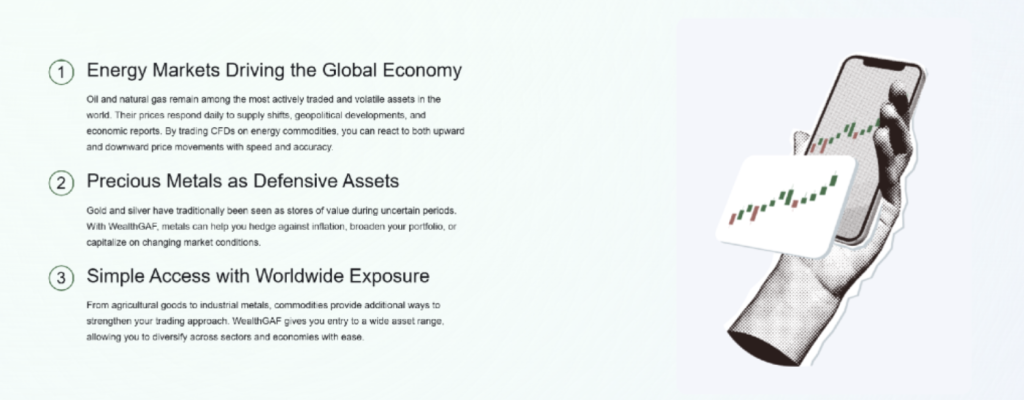
Raw materials follow the same pattern on the commodities page. Energy markets and precious metals have their own headings, and agricultural products and industrial metals appear in the text. Curiosity about an index can lead to the materials behind a region’s economy without leaving the account. Each market has its own page in the Markets menu, so the route from one region to another stays short.
Step Two: Learn the Vocabulary Before the Chart
Next stop is the FAQ page, a glossary of 14 entries. Most entries cover what a newcomer meets on any platform: an order as an instruction to execute a trade, buying as taking a long position, and the closing price as the price at which a product was traded to close a position.
Two more speak to a trader looking at other economies. The stock index entry sets a group of stocks against a base number, so the group can be compared with its own past.
The Purchasing Managers Index entry describes an economic indicator of the performance of manufacturing companies “within a country”.
Because that indicator is defined country by country, it sits naturally beside a list of indices from different economies. Expert commentary on London Business News describes the same page as “plain explanations of positions, pricing, and order mechanics”.
Step Three: Pick a Level, Then Ask in Your Own Language
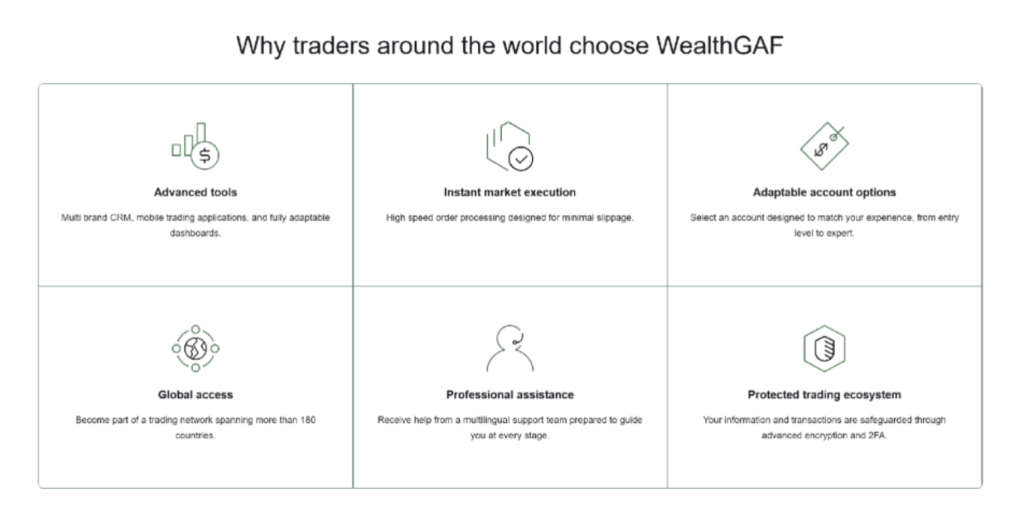
The homepage offers account types for every stage, from beginner through to professional, and the choice comes down to which level fits. It also lists advanced encryption and 2FA among its protections, which a trader can check when the account is opened.
The homepage calls its support side a multilingual team. The site does not name the languages, and the FAQ text is in English, so the practical test is a question: ask which language is covered before relying on it. This is the one open item the public pages leave for a trader from abroad.
What the Path Shows
Followed in that order, the route in this AFG-Management review is clear: markets grouped by region, a vocabulary page, account levels, and a team described as multilingual. The open item is the language list, which only the platform can answer.
ReviewCharts, an outside site, also carries an AFG-Management review for anyone who wants a second reading. For the home-market trader this review began with, the next step is simple: pick the second market, read its FAQ entries, and send the support team one question in the language that matters.